good to know before you plan
The rainy season is ending in March. Showers still arrive most afternoons but they are shorter than in January and February, and the clear spells get longer as the month goes on.
Prices stay at wet-season levels while that happens, around $80 to $160 per person for five days, which is the best ratio of weather to price Ubud offers all year. The complication is Nyepi, which closes the entire island for a full day, and in Ubud that means no transport, no restaurants and no leaving your accommodation. We would find that date and either avoid it or plan to experience it deliberately.
Bali in March: A 5-Day Ubud Itinerary Around Nyepi
Five days is the sweet spot for one region of Bali, and this plan spends all of it on Ubud. March sees the rains easing, and Nyepi closes the whole island for one full day somewhere in the month.
You stay in Ubud the whole time and use it as a hub: temples and rice terraces on the clear mornings, the Campuhan ridge at first light, a waterfall when the rivers are running, and the craft villages when the weather turns. Nothing is more than a short drive, so a shower costs you an hour, not a day.
Five days in Ubud as the rains ease and the island falls silent for Nyepi
March
Week 1


day by day
One base in Ubud for all five nights. Everything sits within about forty minutes, so the days go into the places rather than into transfers.
Day 1: Arrive, eat, sleep.
Day 2: Tirta Empul and Gunung Kawi in the morning, back before the afternoon shower.
Day 3: Campuhan Ridge Walk at sunrise, then Tegalalang rice terraces in the afternoon.
Day 4: Waterfall day. Rivers still high, paths drying out.
Day 5: Slow morning, then the airport.
If Nyepi falls during your stay, the day before belongs to the Ogoh-Ogoh parades and the day itself is spent inside your accommodation. Shift everything above by one day.




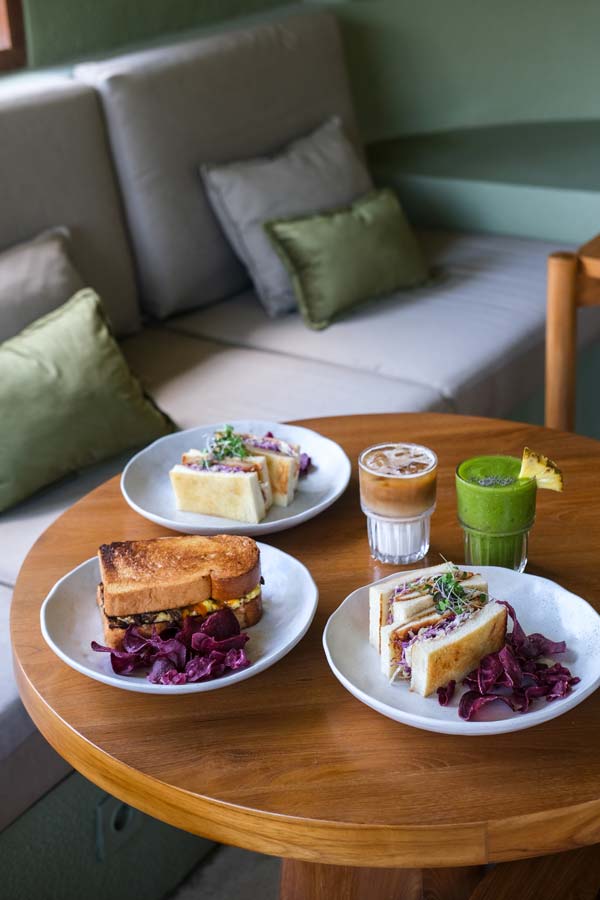



Where to Eat

Central Ubud for the broadest dining selection
Penestanan for cafés and relaxed healthy dining
Tegallalang for restaurants overlooking rice fields
Local villages for traditional Balinese warungs
Ubud markets for casual local food and snacks
Where to Stay

Central Ubud: best for walkable sights.
Monkey Forest Road: best for shops and cafés.
Penestanan: best for a quieter base.
Sayan: best for valley views.
Nyuh Kuning: best for a village setting.
Tegallalang: best for rice terrace stays.


best Things to Do
Explore Ubud’s cultural centre
Walk through rice fields and terraces
Visit Tegallalang Rice Terrace
See Tirta Empul and nearby temples
Walk the Campuhan Ridge
Attend a traditional Balinese dance performance
Join a cooking, craft or wellness class
Explore waterfalls and river valleys
Take a day trip into Bali’s central highlands.
March gets you improving weather at wet-season prices
Book the room first, and check where Nyepi falls before you do. On that one day you cannot leave your accommodation, so the hotel you pick matters more than usual. Compare prices while they are still at wet-season levels. Activities are easy to arrange a few days ahead this month, though nothing runs on Nyepi itself. A car with a driver is the sensible way to cover the temples, terraces and waterfalls, which sit too far apart for scooters in changeable weather. Three links below.
frequently asked questions
How does Nyepi affect a trip to Bali in March?
Nyepi, the Balinese Day of Silence, shuts the entire island down for twenty-four hours. The airport closes, no vehicles run, shops and beaches are off limits, and everyone including visitors stays inside their accommodation. Plan to be checked in the day before. The Ogoh-Ogoh parades on the eve are one of the great spectacles of the Balinese year.
What is the weather like in Bali in March?
The rainy season is ending. Showers still arrive most afternoons but they are shorter than in January and February, and clear spells lengthen through the month. Temperatures hold around 27 to 31 degrees. The landscape is still green from the wet season, which makes March one of the best looking months inland.
Is March a good time to visit Ubud?
One of the best, and it is underrated. Prices are still at wet-season levels while the weather is improving, the rice terraces are still flooded and green, and the crowds have not yet arrived. The one thing to plan around is Nyepi, which falls in March or early April and immobilises the island for a day.